04/11/2025
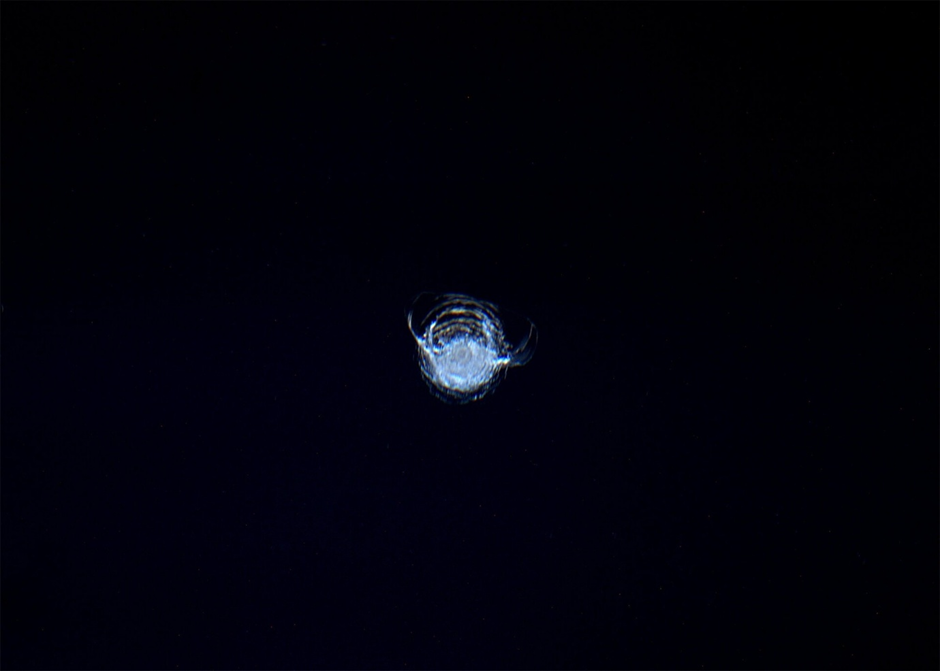
In May 2016, British astronaut Tim Peake looked out through the window of the International Space Station’s Cupola module and saw a terrifying sight. A chip in its quadruple glazed windows, a stark demonstration of the real and present dangers of space debris (see Fig 1). Whilst that incident was minor, it serves as a sobering reminder of the importance of taking the issue of space debris seriously.
Whilst Space may be vast and expanding, the orbits around Earth are not an unlimited resource.
According to the European Space Agency, after more than six decades of space activities, more than 6000 launches have resulted in more than 40,000 tracked objects in orbit, with 3000 tracked objects added in 2024 alone. Fragmentation events are estimated to have generated a population of objects larger than 1 cm numbering over 1.2 million. Since the first verified accidental collision of two artificial objects in space in 1996, the risk of in-orbit collisions has grown to present a clear and substantial danger.
However, along with improved compliance with space debris mitigation guidelines, innovation is crucial to surmounting this challenge. According to the World Intellectual Property Organisation, 67,000 patent families in the field of space transportation have published since 2000, and though in its early stages, patent growth in space debris technologies has experienced a sharp rise, with an increase in space debris related patent publications of almost 5 times in the last 10 years.
To help navigate the key issues and solutions to the crucial issue of Space Debris, we convened an expert panel to explore the state of the technologies and legal frameworks shaping the future of orbital sustainability.
Space traffic management is immature
There is strong consensus that – while space domain awareness is improving – we have a long way to go in developing the required standards, regulations and laws, especially with the increased commercialisation of Low Earth Orbit (LEO). There is some benefit to be gained from looking to the existing models of operation for maritime and aviation, but also recognising that space is a uniquely unforgiving environment.
For example, with respect to collision avoidance, it may not be in an operator’s financial interests to move a satellite unnecessarily. As a result, collision avoidance manoeuvres are typically made at the last minute. Whilst it was discussed that Starlink’s AI autonomous driven collision avoidance system is currently the best practice in this field, it may not be wise or sustainable to rely on one company to avoid collisions with other actors.
In view of the current geopolitical environment, the pragmatic establishment of soft law instruments and international norms, at least amongst the most prominent space-faring nations, will be critical. A central international database for the tracking of all objects launched into LEO is also needed.
Carrots & Sticks must drive sustainable operation
Balancing open market innovation with regulation and licensing will be critical. Insurance companies have taken a significant interest in the emerging space economy and will play an important role in its development, just as they did in the early days of commercial shipping.
There is also a need for a combination of both incentives and conditions for sustainable operations for those companies granted access to LEO. Examples of “carrots” and “sticks” might include fast track licensing, tax credits, clear liability laws and possibly even a space debris levy. Ideally, these would be internationally agreed to discourage a regulatory race to the bottom.
The state of space sustainability
The risk of satellite collisions is increasing, with the impact of such collisions being potentially severe. In a situation where LEO becomes too congested, it may be too costly for insurers to offer sufficient coverage.
Significant R&D is currently taking place to try to create and commercialise the solutions that aim to make space safer and more sustainable. Examples include the technology required for active debris removal missions through to the innovations that will extend the working life of satellites, such as in-orbit servicing and refuelling. Many of these technologies will ultimately need to become standardised, potentially creating significant commercial opportunity for first movers.
At Reddie & Grose we maintain a close interest in the evolution of technology and legal frameworks that will spur the formation of the space economy. We have the specialist knowledge and experience required to draft meaningful and commercially useful patents for our clients, taking into account how and where they are to be deployed, as well as a detailed understanding of the underlying technical concepts. Contact us if you work in this field and would like to know how you can best protect your innovations.
This article is for general information only. Its content is not a statement of the law on any subject and does not constitute advice. Please contact Reddie & Grose LLP for advice before taking any action in reliance on it.