21/05/2026
Naval warfare is undergoing a quiet but profound transformation. The traditional image of aircraft carriers with massive decks filled with crewed fighter jets is evolving into something far more flexible: platforms designed to deploy, manage, and recover autonomous systems across air, sea, and subsurface domains.
From Rapid Dominance to Protracted Attrition
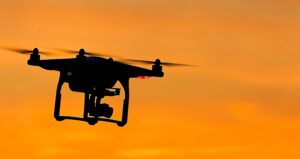
Recent conflicts have demonstrated that militaries are increasingly leaning on low–cost, mass-produced drones to impose continuous pressure on adversaries. These systems function not only as weapons but also instruments of economic strategy to stretch even advanced militaries.
Cheap UAVs can be launched in large numbers, forcing defenders to respond repeatedly with far more expensive systems. A single drone may cost tens of thousands of dollars; while intercepting it can require missiles costing in the millions, creating stark cost ratios in favour of the attacker. Even when defences are tactically successful, they can be strategically unsustainable. This dynamic exposes a critical vulnerability in modern military design.
Enter the Drone Carrier
This is where drone carriers and the retrofitting of existing aircraft carriers become strategically significant.
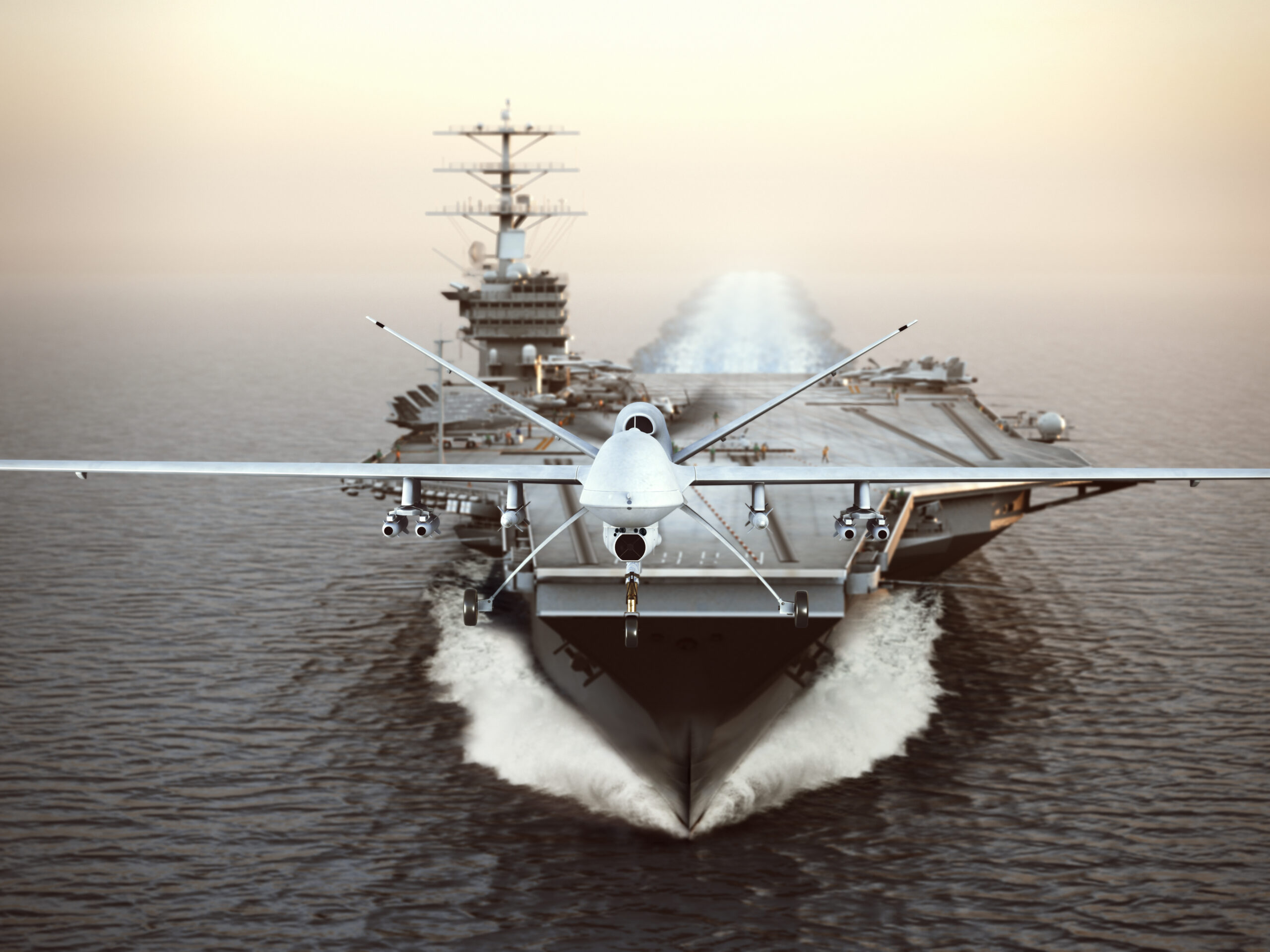
Drone carriers are purpose-built (or adapted) to operate unmanned aerial vehicles (UAVs), unmanned surface vehicles (USVs), and even unmanned underwater vehicles (UUVs). Unlike conventional carriers, these vessels emphasize scalability, automation, and lower operational risk, enabling fleets to extend their reach without increasing crew exposure.
The goal is not just technological modernization; it is economic realignment. Rather than relying solely on high-end interceptors, forces are increasingly deploying low-cost drone swarms of their own to impose costs on adversaries.
Retrofitting the Giants
Rather than building entirely new fleets from scratch, many navies are exploring how to retrofit existing aircraft carriers. This approach is faster, more cost-effective, and leverages already-proven platforms.
A key development is the integration of drone-compatible launch and recovery systems. Companies like General Atomics are developing compact electromagnetic launch solutions that can be installed on existing ships, enabling drone operations even on vessels not originally designed for aviation.
In the UK, this retrofit mindset is evident in the Royal Navy’s evolving strategy. Trials have already demonstrated drones landing on carriers such as HMS Prince of Wales, proving that unmanned aircraft can safely operate alongside traditional jets. More recently, programs like Project VANQUISH aim to deploy short take-off and landing (STOL) autonomous aircraft that require minimal modification to existing carrier infrastructure, avoiding the need for expensive catapults and arrestor systems.
Beyond the Flight Deck: Multi-Domain Autonomy
Modern drone carriers are not limited to aerial systems. Increasingly, they are designed as hubs for coordinated, multi-domain operations.
Experimental platforms and concepts highlight this shift. Autonomous “mothership” vessels can deploy fleets of UAVs, USVs, and UUVs, all working together in synchronized missions from surveillance to strike operations. Academic and prototype systems have already demonstrated carriers coordinating aerial drones with surface robots and robotic manipulators for inspection and intervention tasks, all without human input.
Meanwhile, naval drone technology itself is advancing rapidly. Autonomous aircraft like the Gambit-series carrier-capable drones are being designed specifically for the stresses of deck launch and recovery, signalling a future where unmanned systems are fully integrated into carrier air wings.
New Builds: Purpose-Designed Drone Motherships
While retrofitting dominates near-term strategy, new ship designs are pushing the concept further. Companies such as HD Hyundai Heavy Industries are developing dedicated drone carriers with features like dual flight decks, compact catapults, and optimized layouts for unmanned operations. These vessels can operate with drastically reduced crews, sometimes with fewer than a hundred personnel compared with the thousands typically manning traditional carriers.
Similarly, emerging naval doctrines envision “manned-unmanned teaming” fleets, where traditional carriers, drone carriers, and autonomous support vessels operate as a cohesive network.
The Strategic Shift
The implications of these innovations are significant. Drone carriers offer:
- Lower risk: Fewer personnel in harm’s way
- Cost efficiency: Cheaper platforms and operations
- Scalability: Ability to deploy large swarms of drones
- Flexibility: Multi-domain capabilities across air, sea, and underwater
In essence, the aircraft carrier is evolving beyond a simple floating runway into a central command hub for distributed, autonomous warfare.
Looking Ahead
The transition won’t happen overnight. Retrofitted carriers will likely coexist with traditional air wings for decades, gradually incorporating more unmanned systems as technology matures. But the trajectory is clear: the future fleet will be less about individual platforms and more about interconnected systems.
The innovations in this sector have transformed the carrier from a force-projection platform into a production and deployment hub for attritable systems. Consequently, drone carriers, whether purpose-built or cleverly retrofitted, are poised to redefine naval power in the 21st century.
This content is for general information only. Its content is not a statement of the law on any subject and does not constitute advice. Please contact Reddie & Grose LLP for advice before taking any action in reliance on it.