
23/04/2026
Modern athletes are no longer just competitors on the pitch, court or track. They are brands in their own right. From fashion collaborations to media ventures and lifestyle products, today’s sports stars are increasingly thinking beyond matchday performance and towards long-term commercial value.
Advances in sports science, training methods and recovery technology mean that career longevity at the top level is more realistic than ever before. Elite athletes are performing at a high level well into what was once considered “retirement age”.
We have seen an interesting rise in athletes taking proactive steps to invest in their personal brand strategy early, despite their extended careers. Notable examples include the likes of Lionel Messi, Harry Kane, Usain Bolt and Ella Toone.
Current world darts champion, Luke Littler is another example of elite athletes protecting and commercialising their identities. Littler recently filed a range of UK trade marks, including his name, his nickname ‘THE NUKE’, and his catchphrase “Born to Win”. These are all recognisable traditional forms of trade mark protection.
Perhaps more noteworthy, is Littler’s decision to file a non traditional trade mark for a black and white image of his face. Littler’s application may well have been inspired by a similar trade mark recently registered by Chelsea and England footballer Cole Palmer, and could signify the beginning of a trend amongst athletes and sports stars utilising non-traditional forms of trade marks to try and protect themselves and their brands.

Luke Littler’s application

Cole Palmer’s registration
Whether these applications were filed in an attempt to combat AI Deepfakes, as we have seen recently in the celeb world, or to form part of a wider brand protection strategy, as part of a relatively fringe area of trade mark law they raise interesting questions about the potential value of these kinds of registrations.
The scope of protection offered by these trade marks are arguably limited by the images they filed. In the UK and Europe, we have the concept that a registered trade mark’s scope is “what you see is what you get”, which can be interpreted narrowly. Is Littler’s collared playing shirt a significant element of his application, weakening his ability to challenge images of him in different outfits? If either player adopted a different hair cut or decided to become clean shaven, would their altered appearance still be treated as ‘close enough’ to the above images for the purpose of showing evidence of use of their trade mark?
It doesn’t stop there either. In addition to the image of his face, Palmer also registered a motion mark to protect his famous goal celebration in November 2025.
Palmer’s Motion Mark (left)
It’s not the first time an athlete has sought registered trade mark rights related to a particular celebration. Usain Bolt secured a trade mark registration for the silhouette of his iconic pose. In football, Kylian Mbappé and Erling Haaland also own registered trade marks related to their celebrations. However, these are all static images, in traditional logo form.

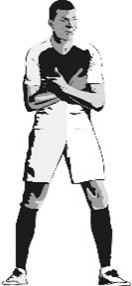

Will we begin to see more motion trade marks? Motion trade marks only account for very few of the applications filed at the UKIPO and they continue to be a topic of debate. The traditional view is that consumers primarily rely on words and images to identify brands. However, the evolution of marketing and advertising habits has led to acceptance of categories of non-conventional trade marks at national IP offices, and a slow rise in registrations of motion marks.
Motion marks are defined as “a trade mark consisting of, or extending to, a movement or a change in the position of the elements of the mark”. They are typically used to protect, for example, an animated logo where the sequence and timing of the animation would be recognisable to consumers. For example, the mobile service O2’s logo shifting as it is surrounded by bubbles. Motion marks have also been used to capture famous individuals performing their signature moves, such as the ‘Salt Bae’ chef’s seasoning technique.
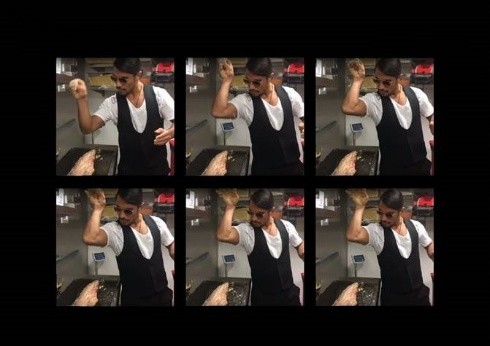
Similarly to the trade mark depicting his face, it is not immediately clear what securing a registration of a motion mark depicting himself doing his goal celebration actually affords Palmer in a practical sense.
Palmer’s motion mark registration could probably not be relied on to stop other players or athletes performing the celebration on the pitch. Trade mark protection fundamentally exists to enable brand owners to tackle other’s use of their mark (or a mark deemed similar) in the course of trade. Performing a celebration on the football pitch doesn’t have the necessary “use of trade mark” in a legal sense for Palmer to enforce his registration. Morgan Rogers (who has also used the celebration too) appears to be safe for now.
In a scenario where Palmer came across another football player replicating the celebration to promote / sell the same merchandise covered by his registration the question would be whether the similarity is sufficient to be a “confusingly similar mark”. Would consumers recognition of different faces mean the marks are not similar?
It also remains an open question whether Palmer would be able claim trade mark infringement against a video game which features a virtual Cole Palmer performing the “shivering” celebration without his consent. Even if he had a claim, this would be difficult if the video game didn’t feature him on the game cover or promotional material, as a player (consumer) would only be exposed to his celebration after they have already purchased the game.
Palmer might not even have his sights on trying to enforce the registration against others. He may well just be using this as the basis of a licensing program, with the player looking to granting retailers the right to use the clip of his celebration in return for royalties. Those retailers could then incorporate the motion mark into banner adverts on websites or digital displays in their stores.
In the UK, examples of non-conventional trade marks such as motion marks being enforced in practice are very limited. It’s a topic that’s likely to come under increasing attention and scrutiny if these trends continue.
Nevertheless, it’s clear these more unorthodox brand strategies adopted by the likes of Palmer and now Littler is reflective of increasing awareness among athletes that brand value can arise from more than just a name on the back of a shirt.
This content is for general information only. Its content is not a statement of the law on any subject and does not constitute advice. Please contact Reddie & Grose LLP for advice before taking any action in reliance on it.
Links