
21/03/2024
As reported previously with European Supermarket News, Tesco is currently involved in trade mark litigation with one of its biggest supermarket competitors, Lidl.
Supermarket chain Tesco has lost its appeal against a ruling of trade mark infringement and passing-off in connection with their branding for their Clubcard Prices scheme in favour of rival supermarket chain Lidl. In 2020, Tesco started using the following logo to display its Clubcard prices:

In 2023, the High Court ruled that use of the above logo by Tesco infringed Lidl’s trade mark registration for the following mark:
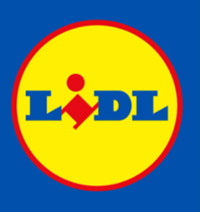
Tesco’s activities were also deemed to constitute passing-off and copyright infringement. The High Court ruling however sided with Tesco on their argument that several of Lidl’s trade mark registrations for the above mark without the LIDL wording, which they claimed had been infringed by Tesco’s activities, had been filed in bad faith. Each party then appealed the High Court decision.
Tesco’s appeal was successful on two grounds. The Court of Appeal agreed that whilst copyright subsisted in Lidl’s logo, Tesco had not taken the requisite ‘substantial part’ of it when creating their logo to constitute copyright infringement.
Tesco were also successful in maintaining that Lidl’s wordless trade mark registrations had been filed in bad faith and consequently they were not valid. However, there ended the Tesco successes.
The Court of Appeal upheld the findings of trade mark infringement of Lidl’s logo mark (above) and passing off. Whilst reluctantly doing so, the ruling agreed with the finding of fact of the High Court that the sign used by Tesco could convey the message that Tesco’s Clubcard prices were the same or lower than Lidl’s. This use constituted both unfair advantage (for trade mark infringement) and misrepresentation (for passing off).
Comment
A particularly significant outcome of the Court of Appeal judgement is that it has shifted the understanding of what constitutes bad faith.
Whilst it had no bearing on the outcome on the decision on trade mark infringement given Lidl’s logo mark (with the word LIDL) was found to be infringed by Tesco, the Court of Appeal upheld Tesco’s counterclaim that Lidl’s registrations for their wordless logos were applied for in bad faith, on the basis that they were intended to extend an unjustified monopoly right over third party use (without the intention to actually use the mark as applied for) and that they were ‘evergreening’ the mark (periodically re-applying for the mark to circumvent non-use provisions). This is a departure from the previous understanding of bad faith in the UK, which required far more evidence of the trade mark holder’s ill intent. The UK are awaiting the Supreme Court’s decision on bad faith issues in Skykick and we suspect that, because of that, the Appeal Judges here did not give significant guidance on the shift of evidence burden onto the trade mark holder to address the question as to reasons behind the filing of the application to register the mark in question.
This article is for general information only. Its content is not a statement of the law on any subject and does not constitute advice. Please contact Reddie & Grose LLP for advice before taking any action in reliance on it.