
17/11/2026
Toblerone’s distinctive triangular chocolate bar is one of the most recognisable products on supermarket shelves. But just how far can a business go in protecting the shape of its products?
That question is at the centre of a new trade mark dispute between Toblerone’s owner, Mondelēz, and British vegan chocolate company Catherine’s Originals.
In October 2026, legal proceedings were brought against Catherine’s Originals over its O’bar chocolate bar, which consists of a series of rounded chocolate segments.
Mondelēz argues that the product infringes its trade mark rights. Catherine’s Originals disputes the allegations, pointing to the differences between its rounded design and Toblerone’s famous triangular peaks.
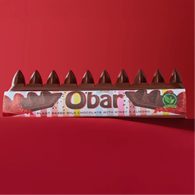
“The Catherine’s Originals O’bar. Photograph: Catherine’s Originals”
Can the shape of a chocolate bar be a trade mark?
When we think of trade marks, brand names and logos usually come to mind. However, businesses can also register the three-dimensional shape of their products as trade marks.
Toblerone is a particularly well-known example. Its owner holds several trade mark registrations protecting the distinctive shape of its chocolate bars, some dating back more than 30 years.
Registering a product shape is not always straightforward. The shape must be capable of distinguishing one business’s products from those of its competitors.
This can be difficult because consumers do not necessarily see the shape of a product as an indication of who makes it. They may simply regard it as part of the product’s design.
However, a shape can become distinctive through extensive use and recognition. Toblerone’s triangular peaks are a good example of how an unusual product design can become closely associated with a particular brand.
Does Toblerone have a monopoly over triangular chocolate?
Not quite.
Owning a registered shape trade mark does not automatically give a business exclusive rights over every product with a vaguely similar appearance.
The differences between the competing products matter.
Toblerone’s chocolate bars feature a series of sharp triangular peaks. Catherine’s Originals’ O’bar, by contrast, has rounded segments which the company says are intended to resemble the letter ‘O’.
One question will be whether consumers are likely to confuse the two products or believe that they come from commercially connected businesses.
However, confusion is not necessarily the only issue.
Well-known trade marks can benefit from wider protection against competing products which take unfair advantage of their reputation or damage their distinctive character.
This means that even if consumers can distinguish O’bar from Toblerone, the court may still need to consider whether the appearance of O’bar creates a sufficiently strong association with Toblerone to infringe its rights.
The outcome is far from certain, particularly given the visible differences between the two shapes.
A familiar dispute for Toblerone
This is not the first time Toblerone has tried to protect its distinctive shape.
In 2017, Mondelēz challenged Poundland’s proposed Twin Peaks chocolate bar, which featured a series of double peaks inspired by the Wrekin and Ercall hills in Shropshire.
The dispute was eventually settled, with Poundland making changes to the product’s shape and packaging.
The latest proceedings could provide further insight into how far a famous product shape can be protected against competing designs.
What can businesses learn from this?
The dispute is a useful reminder that a business’s most valuable trade marks are not necessarily its name or logo.
A distinctive product shape can become an important part of a brand’s identity and, where the requirements for registration are met, can potentially be protected indefinitely through trade mark registrations.
However, registration does not give a business unlimited control over competing product designs. The precise shape protected, the similarities between the products and the reputation of the brand will all be relevant.
For businesses developing new products, it is also worth remembering that trade mark clearance should extend beyond names and logos. The appearance of the product itself may need to be considered.
Whether Toblerone will succeed in its latest dispute remains to be seen. For now, the case serves as another reminder that even something as simple as the shape of a chocolate bar can raise complex questions about brand protection.
This content is for general information only. Its content is not a statement of the law on any subject and does not constitute advice. Please contact Reddie & Grose LLP for advice before taking any action in reliance on it.