17/07/2026
Inspired by a summer of athleticism, our new series explores how our favourite sports are being subtly adapted to make them more sustainable. In particular, we will explore how sustainable materials innovation is being deployed across a wide range of sports to reduce their impact on the planet while keeping the same edge-of-your-seat excitement. Game on.
This summer hasn’t been short for sport. With the World Cup, Wimbledon and the British Open, eyes have been glued to screens across the world. Behind every perfect strike, serve and drive, however, lies a spherical marvel of materials engineering.
Elite balls must meet incredibly demanding performance requirements, traditionally relying on synthetic rubbers, petrochemical plastics and energy-intensive manufacturing processes. But with millions of footballs, tennis balls, and golf balls manufactured, used only a handful of times, and then discarded each year, manufacturers are rethinking how to improve sustainability without elite athletes noticing a difference.
So, what have major tournaments done so far, and what does the genuinely green ball of the future look like? Let’s roll with it.
Football: Glued to the Seams
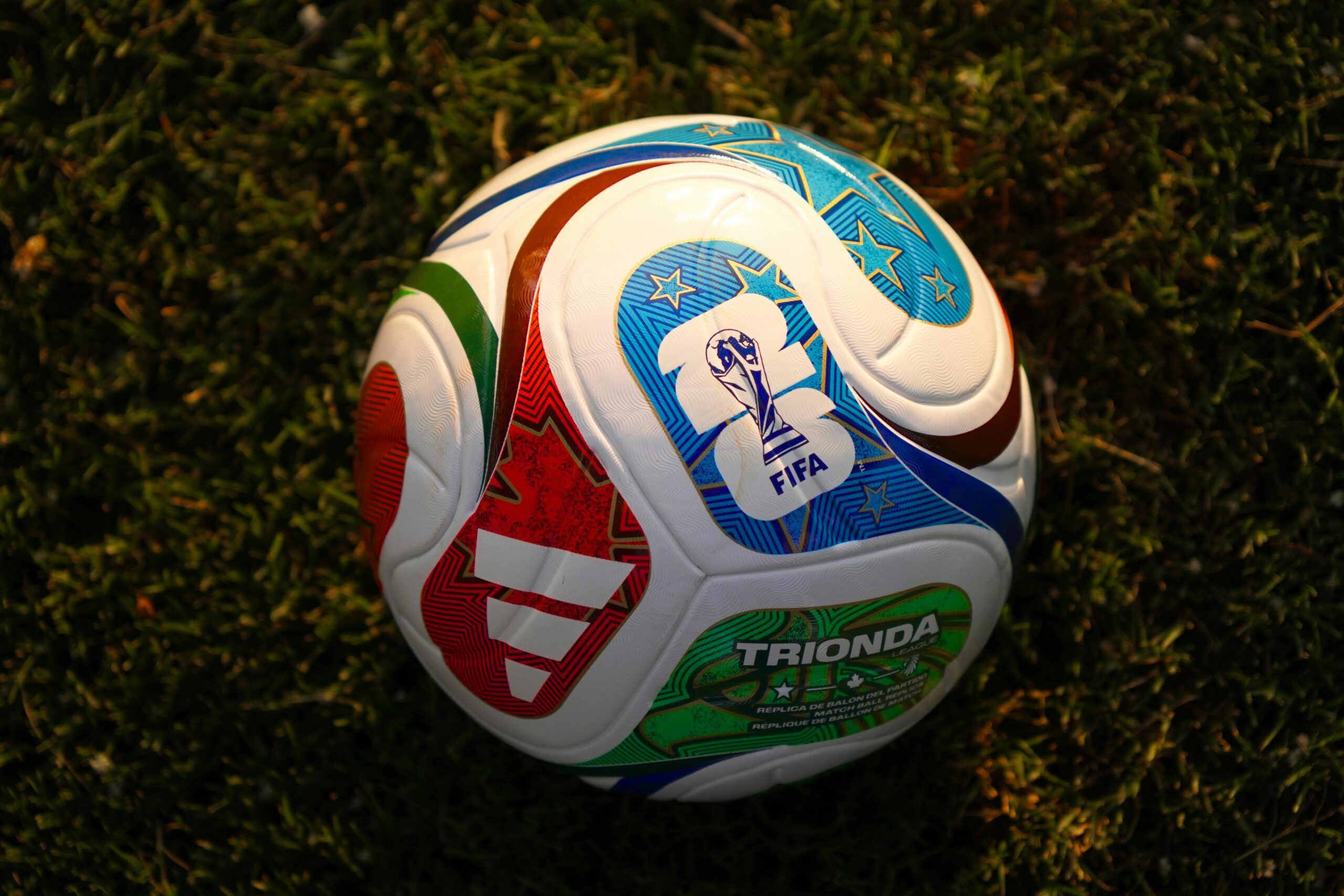
Every FIFA World Cup introduces a new official match ball, with this year’s tournament debuting Adidas’s TRIONDA. The ball reflects the unique three-nation hosting arrangement by the United States, Mexico, and Canada through both its name and distinctive design.
Adidas has a long history of protecting its match balls through intellectual property, and TRIONDA is no exception. For example, its appearance is protected by Registered EU Design No. 015017152-0001.

However, the engineering doesn’t stop at the surface. TRIONDA uses a recycled polyurethane outer layer, while its panels are thermally bonded together, eliminating the need for conventional solvent-based adhesives. Inside, multi-layered foam surrounds a butyl bladder, avoiding the use of virgin plastic materials [1].
Adidas also has an extensive patent portfolio covering sustainable football construction. One example is US patent number US 12491411 B2, published in December 2025, which focuses on reducing resource consumption and greenhouse gas emissions throughout a football’s life cycle.
The patent describes thermally fusing compatible polymer layers together and proposes manufacturing almost the entire ball from materials within the same polymer family. This means that, instead of separating multiple materials at the end of the ball’s life, the whole ball could be recycled in a single processing step.
The patent also extends sustainability beyond construction by proposing a closed-loop business model. Worn-out balls could be returned via retailers, collection points or by post, allowing the recovered material to be used in new footballs or even other sporting goods such as shoes and shin guards. It also envisages deposit schemes, subscription models and even vending machines at sports venues, helping ensure old balls make their way back to the manufacturer instead of landfill.
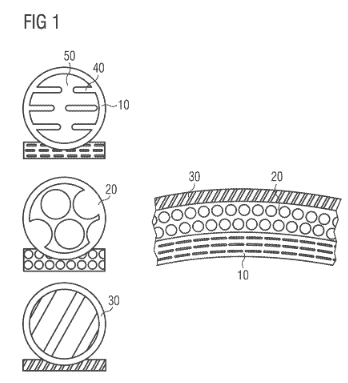
The ball of the future? US patent application publication number US 2026/0077246 A1 in the name of “Game-Set-Match, Inc.”, published in March 2026, describes footballs made from plastics blended with biodegradable additives so that the entire ball eventually biodegrades rather than requiring recycling. They aren’t FIFA-approved just yet, but they offer a glimpse of a football that returns to the earth instead of outliving the players who kicked it.
Tennis: Pressure’s On
Around 55,000 balls are used at Wimbledon alone each year, while millions more are discarded across the professional game, creating waste that is far from biodegradable.
Slazenger’s official Wimbledon ball consists of a pressurised rubber core wrapped in a wool-nylon felt blend. It also incorporates the company’s patented Hydroguard technology: a waterproof polyurethane membrane containing microscopic pores too small for water to penetrate. The result is a ball that has a longer life before needing disposal [2].
The biggest sustainability challenge, however, lies in the fundamental design of traditional tennis balls.
Once a pressurised tin is opened, tennis balls immediately begin losing pressure and, with it, their bounce. This means that balls are often discarded before the materials have even worn out. In professional tournaments the process is even more extreme, with Wimbledon replacing balls every seven to nine games to guarantee absolute consistency.
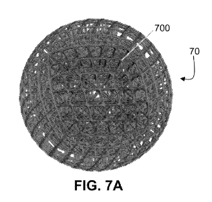
The ball of the future? Airless tennis balls could eliminate this built-in expiry date. For example, granted US patent number US 10850165 B2 from German sports giant Adidas, published in December 2020, describes a tennis ball containing an engineered lattice structure that reproduces the behaviour of a pressurised ball without any gas to escape. They haven’t bounced onto Centre Court just yet because perfectly replicating the feel of traditional balls remains a challenge, but they present an intriguing sustainability opportunity.
Golf: Driving Change
Unlike Wimbledon, The Open doesn’t have an official tournament ball. Instead, players simply select an approved ball, which typically use sophisticated multilayer constructions featuring synthetic cores, mantle layers and polyurethane covers.
One of the biggest sustainability developments in golf is actually being driven by performance rules. From 2030, reduced-distance (“rollback”) standards are expected to limit how far elite golf balls can travel, helping preserve historic courses and reducing the pressure for ever-longer layouts that demand more land, water and maintenance.
While the environmental benefits will largely be realised on the course, the innovation will happen inside the ball. For example, US patent application publication number US 2026/0097265 A1 in the name of US golf company “Acushnet”, published in April 2026, describes a golf ball incorporating a metal foam layer to reduce the coefficient of restitution and therefore the distance travelled after impact.
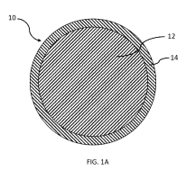
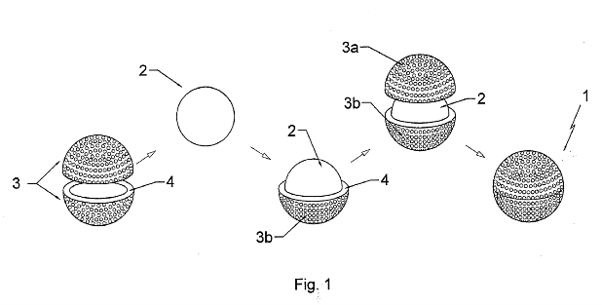
The ball of the future? Biodegradable golf balls are already making waves at coastal driving ranges and resorts. US patent application publication number US 2012/052982 A1 from “Albus Golf”, published in March 2012, describes a water-biodegradable golf ball based on polyvinyl alcohol and environmentally friendly additives that gradually dissolves after entering water. They won’t be appearing in a Titleist tour bag any time soon, but for the millions of recreational golf balls that disappear into lakes and ponds every year, it’s a remarkably elegant solution to a very real pollution problem.
Coming Full Circle
Whether it’s a World Cup winner, a Wimbledon ace or an Open-winning putt, elite sport depends on extraordinarily sophisticated materials engineering.
For decades, innovation focused almost exclusively on performance. Today, sustainability is becoming just as important. Patent filings increasingly point towards recyclable material systems, biodegradable products and cradle-to-grave thinking, showing that even products as highly optimised as sporting balls still have plenty of room for a patentable rethink.
This content is for general information only. Its content is not a statement of the law on any subject and does not constitute advice. Please contact Reddie & Grose LLP for advice before taking any action in reliance on it.