
13/02/2026
Originally a favourite of surfers and cold-water swimmers, now Dryrobe® changing robes are everywhere, endorsed by fashion influencers and athletes alike. However, Dryrobe Limited’s recent UK trade mark battle against Caesr Group Limited’s use of D-Robe highlights the importance of seeking professional IP advice and putting in place a robust IP strategy when seeking to protect a brand that is weakly distinctive and therefore at risk of being used by others in a generic way.
In 2011 Dryrobe Limited launched fleece-lined changing robes which were the first of their kind on the UK market. The company registered its first UK trade mark, the word mark DRYROBE, in 2013, and over the next 10 years built up a portfolio around this house mark. During the COVID-19 pandemic, Dryrobe® changing robes became a go-to for wild swimmers, and the business surged from a turnover of £1.3m in 2017 to £20.3m in 2021. Dryrobe Limited’s retail figures and social media presence have remained high ever since, with new styles and ancillary products making it a popular athleisure wear brand.
In September 2024, Dryrobe Limited commenced trade mark proceedings against Caesr Group Limited, a competitor retailer who was using various D-Robe trade marks (pictured below) in relation to a directly competing product. Dryrobe Limited alleged that use of the D-Robe signs infringed the DRYROBE trade marks and constituted passing off. Caesr Group Limited began selling changing robes in 2022 alongside hundreds of other competitors that emerged amid Dryrobe Limited’s pandemic boom.


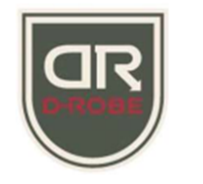
Caesr Group Limited denied infringement of Dryrobe Limited’s trade marks and counterclaimed for cancellation of the DRYROBE marks on the grounds that they were descriptive, non-distinctive, had become customary in the course of trade and were generic, such that DRYROBE was incapable of functioning as a trade mark.
In the High Court (IPEC) judgment on 4th December 2025, the judge held that Dryrobe Limited’s two DRYROBE word marks were descriptive in relation to its core products, including “changing robes”, “waterproof and windproof robes” and “clothing”, since the brand name is a portmanteau created out of the ordinary English words ‘robe’ and ‘dry’.
Normally a finding that a trade mark is descriptive would be fatal to an infringement claim. However, the judge also held that Dryrobe Limited’s use of the Dryrobe® mark after its registration had led to the mark becoming distinctive through use and, importantly, remained distinctive at the point at which Caesr Group Limited counterclaimed that Dryrobe® should be cancelled because the mark was descriptive, non-distinctive and generic. Although the judge found that there was some evidence of generic use of DRYROBE by third parties prior to Caesr Group Limited’s counterclaim (and that the distinctiveness of Dryrobe® had suffered negatively as a result), Dryrobe Limited’s longstanding and extensive campaign to tackle generic third-party use of DRYROBE was instrumental in the judge holding that Dryrobe® had not become a generic term.
Consequently, Dryrobe Limited was successful in its infringement claims. Caesr Group Limited’s trade marks were held to be similar to those of Dryrobe Limited to a medium-high degree, and were being used in relation to identical goods. Caesr Group Limited was found to have infringed Dryrobe Limited’s trade marks under Sections 10(2) and 10(3) of the Trade Marks Act, 1994 and to have passed off its goods as those of Dryrobe Limited.
Dryrobe Limited’s victory highlights the importance of carefully policing third-party use of a trade mark, particularly one that is inherently low in distinctiveness. The company’s owner, Gideon Bright, was made aware of the DRYROBE trade mark’s genericism risks in 2019 when the business began to grow. He took advice from an Intellectual Property specialist and implemented a strategy to tackle generic use of DRYROBE by third parties. This meant that Dryrobe Limited could present evidence at trial of a long history of attempts to halt the slide of the brand into genericism. It was in part due to this evidence that Dryrobe Limited was successful in its trade mark infringement and passing off claims against Caesr Group Limited. If the DRYROBE trade marks were found to have remained non-distinctive or had they been held to be generic, it would have been impossible for Dryrobe Limited to enforce them against competitors using the term ‘dry robe’ for Dryrobe Limited’s core goods.
What can brand owners learn from this decision?
Trade mark genericism occurs when a registered mark becomes the everyday name for a product or service rather than the name to identify a brand. It can arise as a result of the acts of inactivity by the proprietor of a mark, or as a result of other factors.
The ruling in favour of Dryrobe Limited proves how vital trade mark monitoring and policing is at every stage of the trade mark life cycle to safeguard against genericism claims. In particular, it shows that trade mark distinctiveness is not set in stone, nor is it something that can only increase as time goes on and as a brand grows.
While the judge upheld Caesr Group Limited’s claim that the DRYROBE word marks were descriptive for its core changing robe products at the initial point of their registration, the judge also held that the marks had acquired distinctiveness through use as a result of the extensive evidence collated by Dryrobe Limited.
In turn, Dryrobe Limited set an example for how brand owners must be proactive, not reactive, when it comes to protecting their trade marks. Some key pointers for this are outlined below.
- Educate consumers
Having evidence of efforts to educate consumers not to use a trade mark in a generic way is likely to be essential should a brand owner find themselves defending an allegation of genericism.
Consumer habits can play a large part in contributing to brand genericism, but by actively monitoring and regulating how trade marks are used, and engaging with consumers when a brand is being used in an incorrect way, brands can encourage customers to play a part in ensuring that a brand remains just that.
- Think adjectives, not nouns
The Dryrobe® brand’s website has a page specifically dedicated to this effect. A “no substitutes” video pictures “Nice try robes” and “unsatisfy robes”, explaining that only a genuine Dryrobe® from Dryrobe Limited can be called a Dryrobe®.
Trade marks should be used as adjectives and precede the generic category of products or services concerned: for example Dryrobe® clothing . If the brand name pertains to a new product, it is the trade mark owner’s interests to either coin or promote a new descriptive term to reference it. In the case of Dryrobe Limited, this meant presenting its products as pioneers in the changing robe market, in addition to covering them in eye-catching branding. Brands including LEGO, Adobe, Google and Portakabin all have webpages dedicated to similar strategies.
- Plan ahead
Dryrobe Limited’s boom during the COVID-19 pandemic proves how drastically a brand’s consumer base and market presence can change in a short space of time. To take advantage of this, seeking informed IP advice as early as possible is important when shaping a business strategy.
For business owners considering new trade mark registrations, planning ahead means avoiding overly descriptive brand names. If your products are unlike anything else on the market, as the Dryrobe® changing robes were when they launched, it also means devising a long-term plan for how to use and monitor the trade marks you choose, so you have evidence of distinctiveness to call upon should you require it later down the line.
For existing brand owners, Dryrobe’s victory is a reminder that it is never too late to start developing an IP strategy to safeguard a brand’s distinctiveness. Generating consumer awareness through advertising and social media is an effective strategy for brands of any size.
Conclusion
While on the face of it, Dryrobe Limited may seem to be going above and beyond to remind consumers that Dryrobe® is a brand rather than a descriptor, the judgment has shown that this is the expectation for defending a claim for genericism.
The judge in this case referred to a principle established in a previous case (Hormel Foods v Antilles [2005]) that a proprietor who registers a highly descriptive trade mark “bears a heavier burden to take steps to prevent it becoming a common name than one who registers an inherently distinctive mark”. These words should be heeded by all brand owners.
The full judgment can be read here.
This article is for general information only. Its content is not a statement of the law on any subject and does not constitute advice. Please contact Reddie & Grose LLP for advice before taking any action in reliance on it.