
12/01/2026
This past Christmas, many video game fans may have hoped to receive the gift of a new Nintendo Switch 2.
While Nintendo has enjoyed over 10 million sales in the first four months for their latest console, they have recently received a slew of unfavourable decisions from the EUIPO’s Board of Appeal (BoA) in relation to attempts to use the trade mark system to protect one of their classic models.
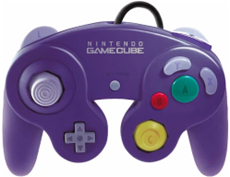
The Nintendo GameCube was launched in 2001 (2002 in Europe) and competed against the original Xbox and the PlayStation 2.
The GameCube’s controller adopted a two-handle design, moving away from the three-handled design for their previous console’s controller. The design of the controller remained consistent until the console was discontinued in 2007, and it was compatible with the GameCube’s successor, the Nintendo Wii.
Applications
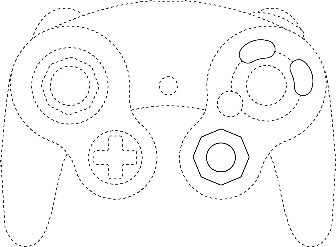
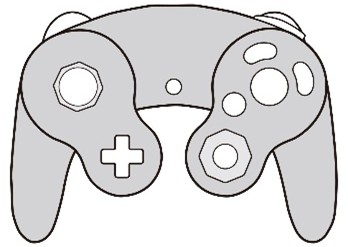
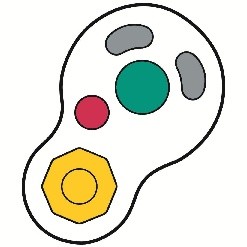
In February 2024, Nintendo filed 3 trade mark applications covering the GameCube’s controller: a position mark for the button layout, a greyscale image of the full device, and a colour image of the controller’s right side. These applications would be refused by the EUIPO on the grounds that they could not be sufficiently distinguished from other shapes commonly used for controllers. Nintendo would appeal the refusals, leading the BoA to publish decisions this year.
The BoA found that the layout of two bean-shaped buttons positioned at the top and a larger a sphere-shaped button positioned in the middle does not depart significantly from the norm or customs of the sector. To support this conclusion, the BoA relied on online research which included other controllers made by Nintendo, their primary competitors (e.g. Sony), and producers of cheaper third-party controllers. This assessment of the market, as required by the trade mark system, reflected the industry in 2024 when the applications were filed, rather than the commonly used shapes for controllers when the console was launched in 2001.
In addition to video game controllers, the Greyscale Mark and Colour Mark also covered goods in Class 09, including software, memory cards, and batteries. Although these secondary goods were not objected to at first instance, but the BoA asked the examiner to reconsider on the basis that the marks are descriptive. For example, the BoA suggested that “a memory card or a battery with a controller image might suggest it’s used to store game data or controller settings”.
Conclusion
Nintendo previously met resistance from the EUIPO in 2017 when it filed applications for controllers of other consoles, including the Nintendo Switch, Nintendo 64, and the original Nintendo Entertainment System. While these applications were ultimately registered for related goods, including memory cards and batteries, Nintendo were unable to secure protection for consoles and controllers under these marks.
The BoA have remitted the pending cases to the examiners to consider whether the marks have acquired distinctive character in the EU. Despite the console selling over 4.4 million units in Europe, Nintendo may struggle to prove that the layout of the controller would be recognised by a significant proportion of EU consumers as badge of origin, especially when every controller had “NINTENDO GAMECUBE” printed on the device and its packaging.
However, in the UK, Nintendo has been more successful, managing to register the Greyscale Mark on the basis of acquired distinctive character for goods including “controllers for electronic devices hand-held consoles” in July 2025.
This article is for general information only. Its content is not a statement of the law on any subject and does not constitute advice. Please contact Reddie & Grose LLP for advice before taking any action in reliance on it.