
30/10/2025
In July 2025, the UKIPO issued two very similar invalidity decisions on two different registered designs for shoes. The two decisions captured our interest due to both proprietors of the designs in question admitting that they had disclosed their design outside of the 12-month grace period applicable to registered UK designs. Most proprietors aim to defend the novelty of their designs and so admitting to a prior disclosure is very unusual.
These cases remind us that even the owner of a registered design can make a novelty-destroying disclosure that invalidates their own registration.
Background
O/0644/25 (Ele Distribution Ltd V George Rye & Sons Ltd) and O/0646/25 (Erkan Fakili v George Rye & Sons Ltd) are both decisions concerning applications for invalidity filed by George Rye & Sons Ltd in January 2025 against two different footwear designs.
George Rye & Sons Ltd argued that the two designs are invalid on the grounds that each of the designs are not novel because they have been selling them since 2019. Consequently, both designs fail to meet the requirements set out in Section 1B of the Registered Designs Act.
Requirements under Section 1B of the Registered Designs Act
Section 1B of the Registered Designs Act defines the requirements that a design must fulfil in order to be validly protected by a registered UK design.
The design must be new, and it must have individual character. This means that the design must differ from all previously published designs by more than immaterial details, and that the design must give a different overall impression compared to previously published designs.
Section 1B (6) of the Registered Designs Act defines certain exceptions to this requirement. For example, prior disclosures by a designer or their successor in title within a 12-month period before the filing date of the application do not count as a previously published design. Similarly, there are provisions for publications based on confidential information, and publications as a consequence of abuse.
The Decisions
O/0644/25 – Registered UK design no. 6381919
Registered UK design no. 6381919 was filed by ELE Distribution Ltd on 30 July 2024 and has the following representations:
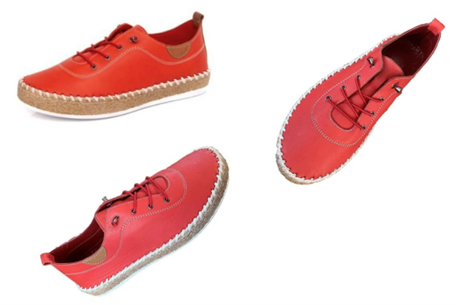
Registered UK Design No. 6381919
On 15 January 2025, George Rye & Sons Ltd applied to invalidate registered UK design no. 6381919 on the grounds that the design is not new and does not have individual character.
The George Rye & Sons Ltd claimed to have first marketed shoes to the design in April 2019 and to have sold the product to more than 250 UK retailers between 2019 and 2024; prior to the filing date of registered design application.
ELE Distribution subsequently filed a defence and counterstatement denying George Rye & Sons’ claims and, crucially, claiming to have sold the shoe themselves since 2023.
The Tribunal wrote to ELE Distribution and requested clarification on whether they had made the design available to the public in 2023 and for them to give a more specific date of publication. ELE Distribution proceeded to file an amended counterstatement and invoice evidence to supports its claim that the shoe was put onto the UK market on 14 July 2023.
Since the shoe design was put on to the UK market more than 12 months before registered UK design application no. 6381919 was filed, inevitably, the Tribunal issued a short decision to invalidate the design due to lack of novelty over the prior disclosure.
O/0646/25 – Registered UK design no. 6154438
Registered UK design no. 6154438 was filed by Erkan Fakili on 12 August 2021 and has the following representations:
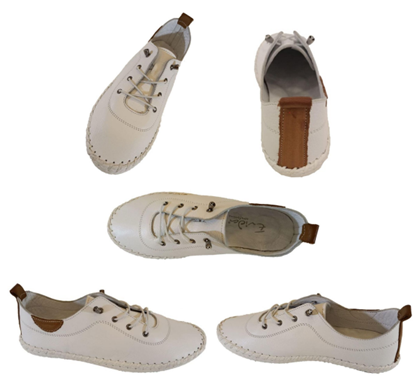
Registered UK Design No. 6154438
Similarly, on 21 January 2025, George Rye & Sons Ltd applied to invalidate registered design no. 6381919 on the same grounds that the design is not new and does not have individual character.
George Rye & Sons Ltd claimed again to have first marketed shoes to the design in April 2019 and to have sold the product to more than 250 UK retailers between 2019 and 2024; prior to the filing date of the registered design application.
Erkan Fakili then filed a defence and counterstatement denying George Rye & Sons’ claims and claiming to have sold the shoe since 2018 in its bag and shoe store.
Unsurprisingly, the Tribunal requested that Erkan Fakili clarify whether they were claiming to have made the design available to the public in 2018, prior to their design filing date of 12 August 2021.
In response, Erkan Fakili, like ELE Distribution Ltd, filed an amended counterstatement with email and invoice evidence that supported their claim that the shoe was put onto the UK market in November 2018.
This evidence confirmed that the shoe design was disclosed to the public more than 12 months before the registered design application was filed in the UK and confirmed the Registrar’s preliminary view that the design was invalid due to the prior disclosure.
Hearings and CMC
Both proprietors separately requested hearings and a case management conference (CMC) following the decisions. Neither proprietor sought to amend their claimed date of first disclosure of their designs.
Instead, both proprietors requested that their unregistered rights were considered and suggested that a design held by the George Rye & Sons Ltd was also invalid. The Registrar explained that it was not possible for unregistered design rights or the validity of the other parties registered design rights to be taken into consideration.
Conclusion
It does not matter who made a novelty-destroying disclosure unless it falls within one of the limited exceptions under Section 1B (6) of the Registered Designs Act (described above). In these two cases, since the novelty-destroying disclosures was made more than 12 months before the respective filing dates, none of the exceptions can apply.
Accordingly, in the absence of any reason to exclude the disclosures, the Registrar declared that both registered designs are invalid on the basis that each of the designs was evidently not new when its application was filed.
Takeaway points
It is important to note when considering registered design rights that:
- It does not matter who makes a novelty-destroying disclosure. A novelty-destroying disclosure can be made even by the owner of the registered design. There is a 12-month “grace period” for such disclosures, but this is strict and non-negotiable.
- The legal frameworks governing registered and unregistered design rights are distinct and the Registrar has no leeway to make decisions about unregistered design rights during proceedings focused on a registered design.
- When challenging a registered design, a separate invalidation application should be filed against that design. It is not possible to invalidate one registered design during invalidation proceedings for another design.
In invalidation proceedings, the invalidity applicant must prove a prior disclosure, which can be difficult. In these cases, the proprietor admitted a different prior disclosure, removing that burden from the invalidity applicant and confirming that the registered designs were indeed not valid.
At Reddie & Grose LLP, we have extensive experience of protecting designs and advising on IP strategy. Please feel free to get in contact.
This article is for general information only. Its content is not a statement of the law on any subject and does not constitute advice. Please contact Reddie & Grose LLP for advice before taking any action in reliance on it.